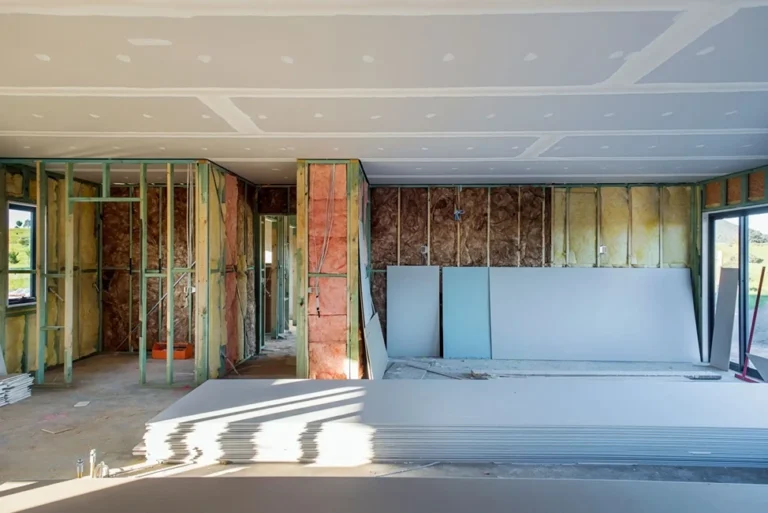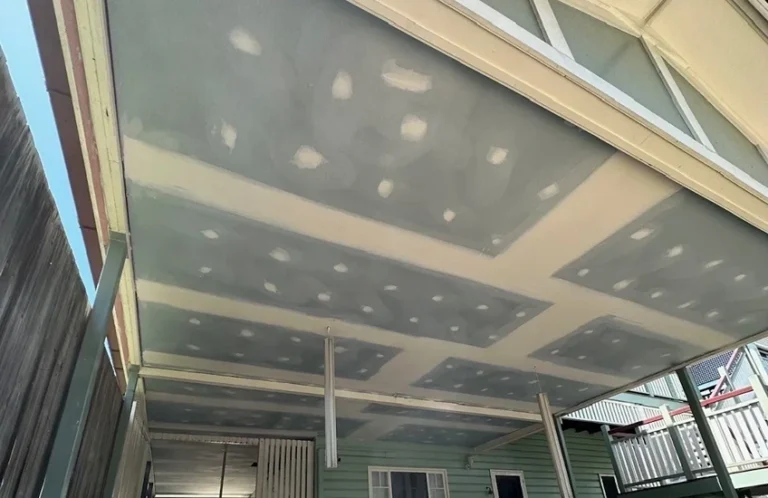
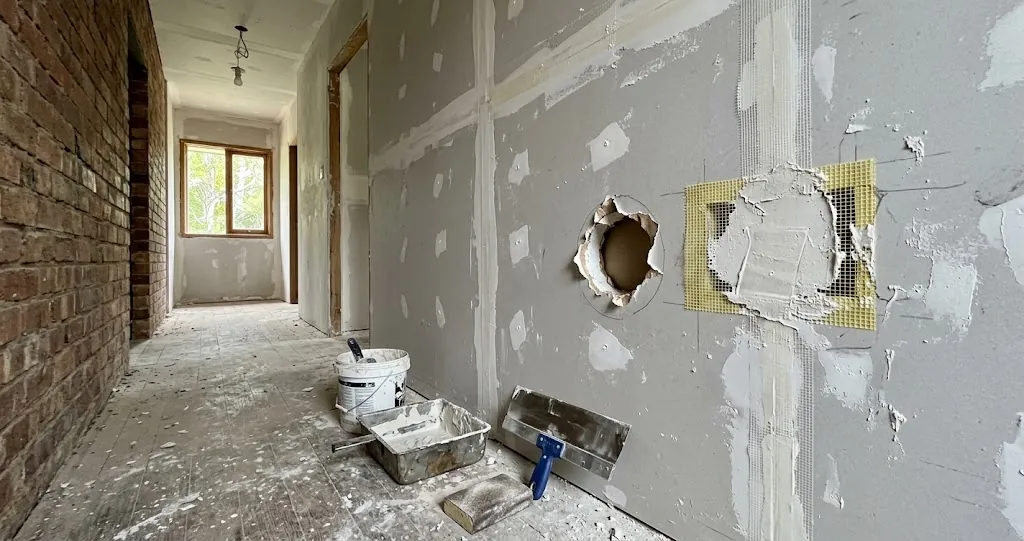
Most holes in plaster walls start the same way: a door handle with no stopper behind it, or a TV bracket that pulled out of the board. If you want to know how to fix hole in plaster wall damage yourself, this guide walks through it by hole size, using the same materials we use on our own repair jobs.
It’s written for Brisbane homeowners and renovators who are handy with a scraper. We’ll also be straight about where DIY stops working, because a patch you can see every time the afternoon sun hits the hallway is worse than no patch at all.
For anything past a quick fix, our residential plastering team at MLR Plastering & Interiors handles patch repairs across Brisbane and South East Queensland.
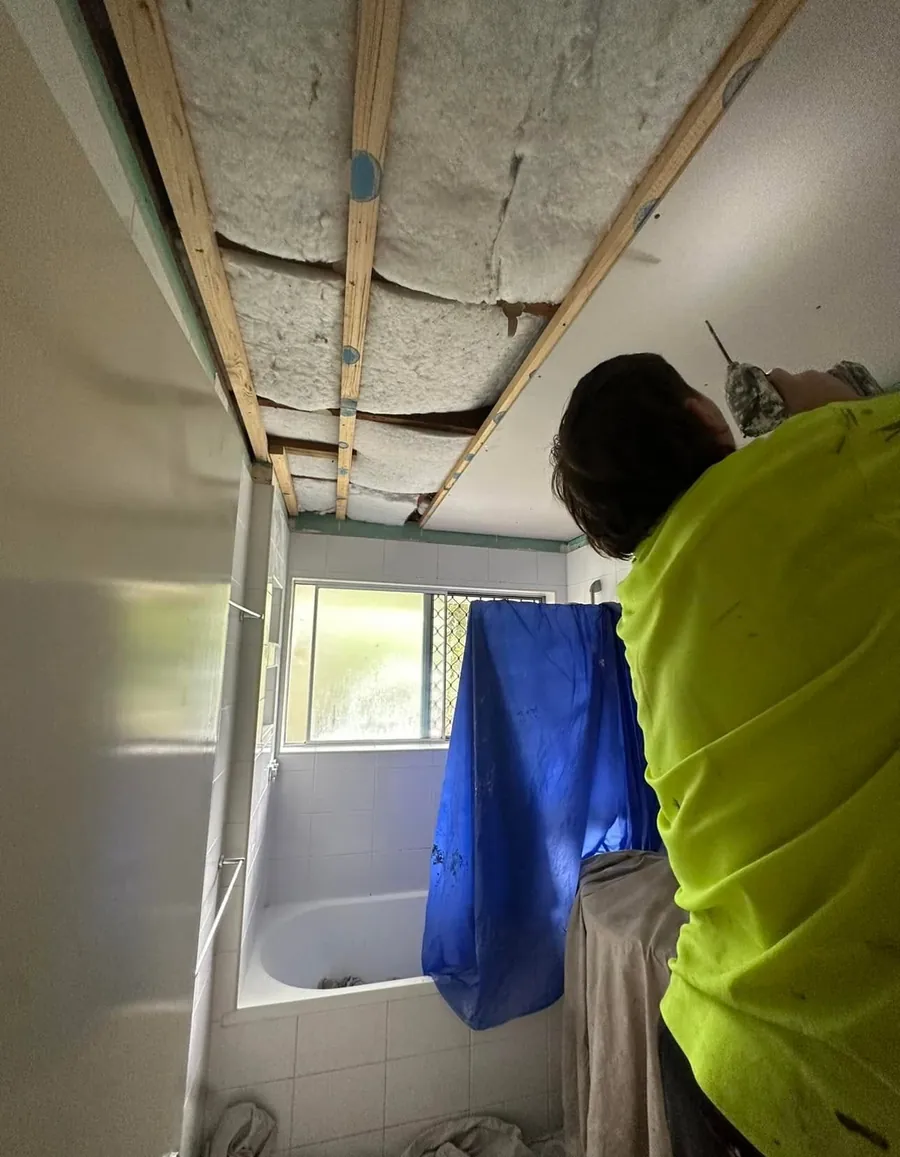
Is your wall plasterboard or solid plaster?
Knock on it. Plasterboard sounds hollow between the studs and flexes slightly under your knuckles, and it’s what you’ll find in most modern Brisbane homes. Solid plaster sounds dull and dead because it’s trowelled straight onto brick or block. The repair method is different for each, so check before you buy anything.
Older brick homes and some unit blocks from the 60s and 70s often have hard-set plaster over masonry. You’ll also come across fibre cement sheeting (fibro) in older bathrooms, laundries and eaves. It looks like plasterboard from the front but it’s harder and denser, and that difference matters.
How to fix hole in plaster wall damage by size
Measure the hole across its widest point. That number decides almost everything about the repair.
Small holes under 10mm (nails, screws and wall plugs)
This is the easy one. Pull out any loose wall plug with pliers and press the torn paper edges back with your scraper handle.
- Fill with a lightweight pre-mixed filler, pushed in with a 50mm flexible scraper.
- Leave it slightly proud, because lightweight filler shrinks a touch as it dries.
- Sand flush with 180 to 240 grit paper wrapped around a block, not your fingertips.
- Spot prime before painting, or the filler will show as a dull spot.
Two thin passes beat one thick blob. If the filler cracks or sinks after drying, it went on too heavy.
Medium holes from 10mm to about 100mm
This is door handle territory. There’s nothing behind the hole to hold filler, so the first job is giving it a backing.
The quickest DIY option is a self-adhesive mesh patch. Stick it over the hole, then bed it in with a setting-type base coat compound, which hardens by chemical reaction rather than by drying out. Mix it to a thick yoghurt consistency and use it inside the working time on the bag.
Once that sets, run a second coat a little wider, then finish with topping compound feathered at least 100mm past the mesh so there’s no hump.
On our jobs we usually skip the mesh and glue an offcut of plasterboard in behind the hole with cornice cement, or cut a butterfly patch with the paper face left on to act as built-in tape. Both give a flatter plaster wall patch than mesh, which can show through thin coats.
How to fix a large hole in a plaster wall (over 100mm)
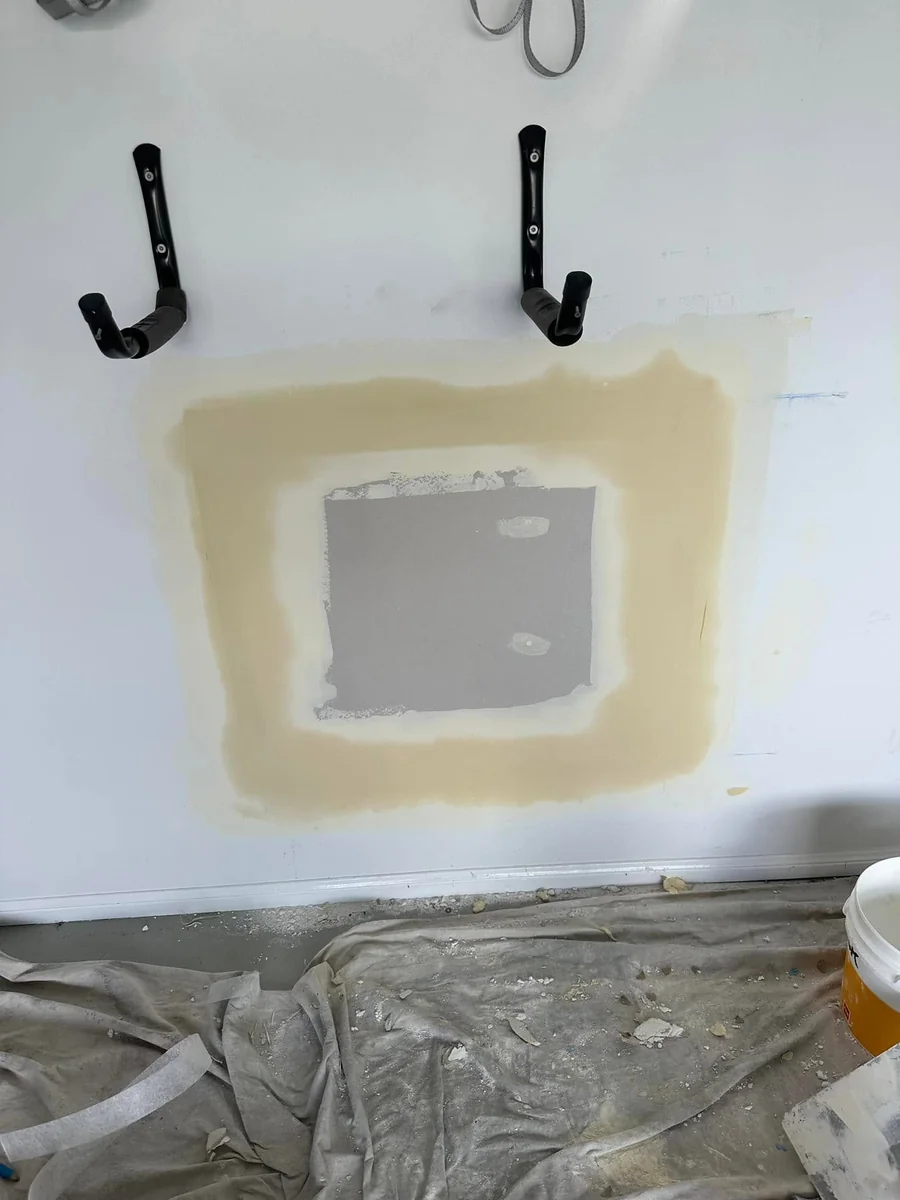
Anything you could fit a fist through needs a proper insert. Here’s how to repair a hole in a wall that size:
- Mark a neat square around the damage and cut it out with a plasterboard saw. Straight edges tape far easier than ragged ones.
- Screw a timber batten or a strip of board behind each edge, or cut back to the nearest studs, so the new piece has something solid to fix to.
- Cut a new piece of plasterboard the same thickness as the wall (check the cut edge, it’s usually 10mm). Screw it in with heads just below the surface, without tearing the paper.
- Tape every joint with paper tape bedded in base coat, then add a second base coat once the first has set.
- Finish with two thin topping coats, each wider than the last, and sand back with a fine sanding sponge.
- Seal with an undercoat before your top coats of paint.
A good large patch often ends up two or three times wider than the hole once it’s feathered out. Stopping right at the edge of the insert is why so many DIY patches leave a visible square under the paint.
Holes in solid plaster on brick
Rake out anything loose until you hit firm plaster and brush out the dust. Dampen the masonry or apply a bonding agent so the brick doesn’t suck the new material dry and crack it.
Fill deep holes in layers no thicker than the product allows, scratching each coat so the next one grips, then finish with topping compound. When DIY fills drop out of old hard-set walls, it’s nearly always because the layers went on too thick.
Check two things before you cut into any wall
Cutting blind into a wall is how a quick patch turns into an electrician’s call-out.
- Services behind the board. Run a stud and cable detector over the area first. Take extra care near power points and switches, where cables usually run straight up, and turn that circuit off if you’re cutting close by.
- Asbestos. Fibro sheeting and some older textured coatings can contain it. The Queensland Government’s guide on asbestos precautions for home renovators warns that a house built before 1990 has a good chance of containing asbestos. If you’re unsure what the wall is made of, don’t cut, drill or sand it until it’s been tested.
When to call a plasterer instead of doing it yourself
DIY is fine for a few small holes in a bedroom wall. Call a plasterer when the damage is bigger than your hand, sits in a spot that catches strong side light, or points to a problem behind the wall.
- The board is soft, stained or swollen around the hole. That’s moisture, and patching over it just hides a leak that keeps going.
- Cracks run out from the hole or along the sheet joints, which can point to movement rather than a one-off knock.
- The hole is in a ceiling, where sagging sheets need refixing before any patching.
- The wall has a texture or older finish you need to match, like the slightly rough hard-set walls in a 1960s brick home.
- You want it invisible under semi-gloss or gloss paint, which shows every ridge.
If the hole came from a storm, a burst pipe or an accident, it may be part of an insurance claim. Our insurance plaster repairs page explains how we handle those jobs, and we can deal with your insurer directly where needed.
In Queensland, building work valued over $3,300 must be done by someone holding the right licence, and the Queensland Building and Construction Commission’s guide on who needs a building licence in Queensland sets out the details. MLR Plastering & Interiors holds QBCC licence 15533475, so you can check us before any work starts.
Frequently asked questions
What is the best thing to fill holes in plaster?
A lightweight pre-mixed filler is best for nail and screw holes up to about 10mm. For anything bigger, use a setting-type base coat compound over a backing such as mesh or a plasterboard insert, then finish with a topping compound. The base coat does the structural work and the topping gives you a smooth surface to sand.
What do you use to repair holes in plaster walls?
Most plaster wall repair jobs use a base coat compound, a topping compound, paper tape or mesh, and a plasterboard offcut for anything bigger than a coin. For tools, you’ll want a 100mm and a 200mm scraper, a sanding block or sponge, and a sealer undercoat so the patch takes paint the same way as the rest of the wall.
Can you fix a hole in the wall yourself?
Yes, if the hole is small and the wall behind it is dry and solid. Nail holes and doorknob-sized holes are realistic weekend jobs with a mesh patch and some patience. Leave it to a plasterer if the hole is large, in a ceiling, near water damage, or in a wall that might contain asbestos.
How long does a plaster patch take to dry before painting?
It depends on the compound and the weather. A setting-type base coat hardens within the working time printed on the bag. Topping compound and lightweight filler dry by air, so they take longer in Brisbane’s humid months. Wait until the patch is evenly pale with no dark damp spots, then sand, seal and paint.
Why can I still see the patch after painting?
Usually because the patch wasn’t feathered out wide enough or wasn’t sealed first. A narrow patch leaves a hump that catches side light, and unsealed compound soaks up paint differently from the wall around it. Sand the edges wider, apply an undercoat over the whole patch, then repaint.
Do you need to replace the whole sheet of plasterboard?
No, not for most holes. A neat insert screwed to backing strips or studs, then taped and feathered, is enough for holes up to the size of a dinner plate. Replace the sheet when it’s water-damaged, sagging or cracked across several spots, because patching won’t fix board that has gone soft.
Getting the patch done properly
If the hole is bigger than you’d like to tackle, or you’ve had a go and can still see the outline under the paint, send us a photo through our free quote request form or call 0452 216 493. A clear shot with a tape measure in frame helps us price it quickly.